This study was supported by US Public Health research grant AM 09805 from the National Institute of Arthritis, Diabetes, Digestive and Kidney Diseases.
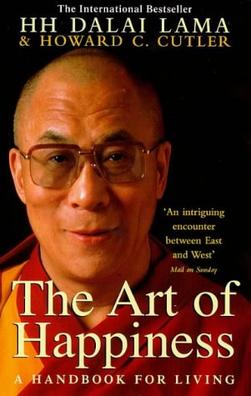
Nearly every time you see him, he's laughing, or at least smiling. And he makes everyone else around him feel like smiling. He's the Dalai Lama, the spiritual and temporal leader of Tibet, a Nobel Prize winner, and a hugely sought-after speaker and statesman. Why is he so popular? Even after spending only a few minutes in his presence you can't help feeling happier.
If you ask him if he's happy, even though he's suffered the loss of his country, the Dalai Lama will give you an unconditional yes. What's more, he'll tell you that happiness is the purpose of life, and that the very motion of our life is toward happiness. How to get there has always been the question. He's tried to answer it before, but he's never had the help of a psychiatrist to get the message across in a context we can easily understand.
The Art of Happiness is the book that started the genre of happiness books, and it remains the cornerstone of the field of positive psychology.
Through conversations, stories, and meditations, the Dalai Lama shows us how to defeat day-to-day anxiety, insecurity, anger, and discouragement. Together with Dr. Howard Cutler, he explores many facets of everyday life, including relationships, loss, and the pursuit of wealth, to illustrate how to ride through life's obstacles on a deep and abiding source of inner peace. Based on 2,500 years of Buddhist meditations mixed with a healthy dose of common sense, The Art of Happiness is a book that crosses the boundaries of traditions to help readers with difficulties common to all human beings. After being in print for ten years, this book has touched countless lives and uplifted spirits around the world.
Supported by US Public Health Research Grant HL 34408 from the National Heart, Lung, and Blood Institute; National lnstitutes of Health Research Grant No. HL06242; a Travel Grant from
Welcome Trust, London; and the International Atomic Energy
Agency Fellowship Program of the National Research Council, National Academy of Sciences.
This article was supported by United States Public Health Research Grants AM 09805-01 and AM 09805-02 from the National Institute of Arthritis and Metabolic Diseases.
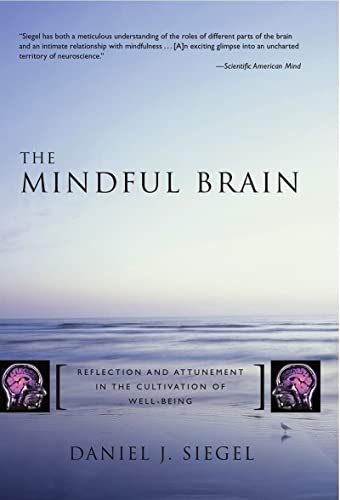
From the author of the internationally-acclaimed best-selling text The Developing Mind, and esteemed leader and educator in the field of mental health, comes the first book ever to integrate neuroscience research with the ancient art of mindfulness. The result is a groundbreaking approach to not simply mental health, but life in general, which shows readers how personal awareness and attunement can actually stimulate emotional circuits in the brain, leading to a host of physiological benefits, including greater well-being, resilience, emotional balance, and improved cardiac and immune function. For clinicians and laypeople alike, Siegel’s illuminating discussions of the power of the focused mind provide a wealth of ideas that can transform our lives and deepen our connections with others, and with ourselves.
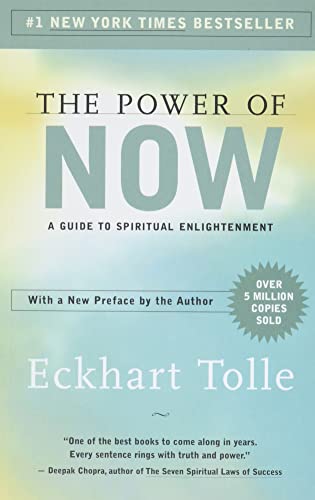
To make the journey into the Now we will need to leave our analytical mind and its false created self, the ego, behind. From the very first page of Eckhart Tolle's extraordinary book, we move rapidly into a significantly higher altitude where we breathe a lighter air. We become connected to the indestructible essence of our Being, “The eternal, ever present One Life beyond the myriad forms of life that are subject to birth and death.” Although the journey is challenging, Eckhart Tolle uses simple language and an easy question-and-answer format to guide us.
While the American story has not always—or even often—been heroic, we have been sustained by a belief in progress even in the gloomiest of times. In this inspiring book, Meacham reassures us, “The good news is that we have come through such darkness before”—as, time and again, Lincoln’s better angels have found a way to prevail.
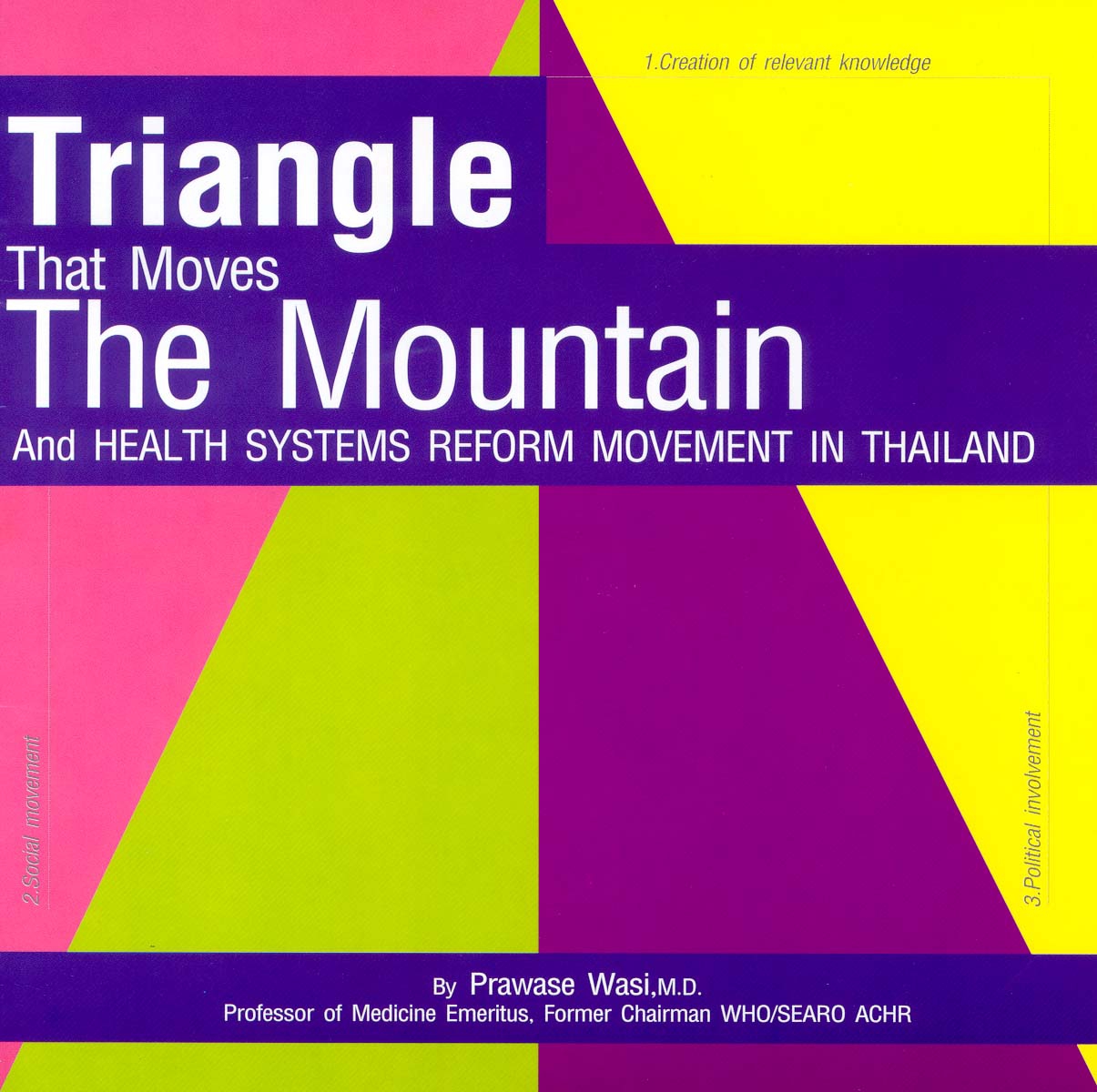
Thailand, as many other countries, has faced extremely difficult problems political, economic, social, cultural, environmental, etc., culminating in the phenomenon of social crisis, severely affecting health. The problems are interconnected, complex and extremely difficult to solve. In fact, some feel that they are too big and too difficult and beyond imagination on how to solve them. But we have to find ways and means to get out of the crisis in order to be able to move forward positively. There is increasingly well-known in Thailand an approach structure called Triangle that Moves the Mountain. The Mountain means a big and very difficult problem, usually unmovable. The Triangle consists of : (1) Creation of relevant knowledge through research, (2) Social movement or social learning and (3) Political involvement
This study was supported by U.S. Public Health Research Grant HL 34408 from the National Heart, Lung, and Blood Institute and CEC grant, Program Contract No. TS2.0131.TH(H).